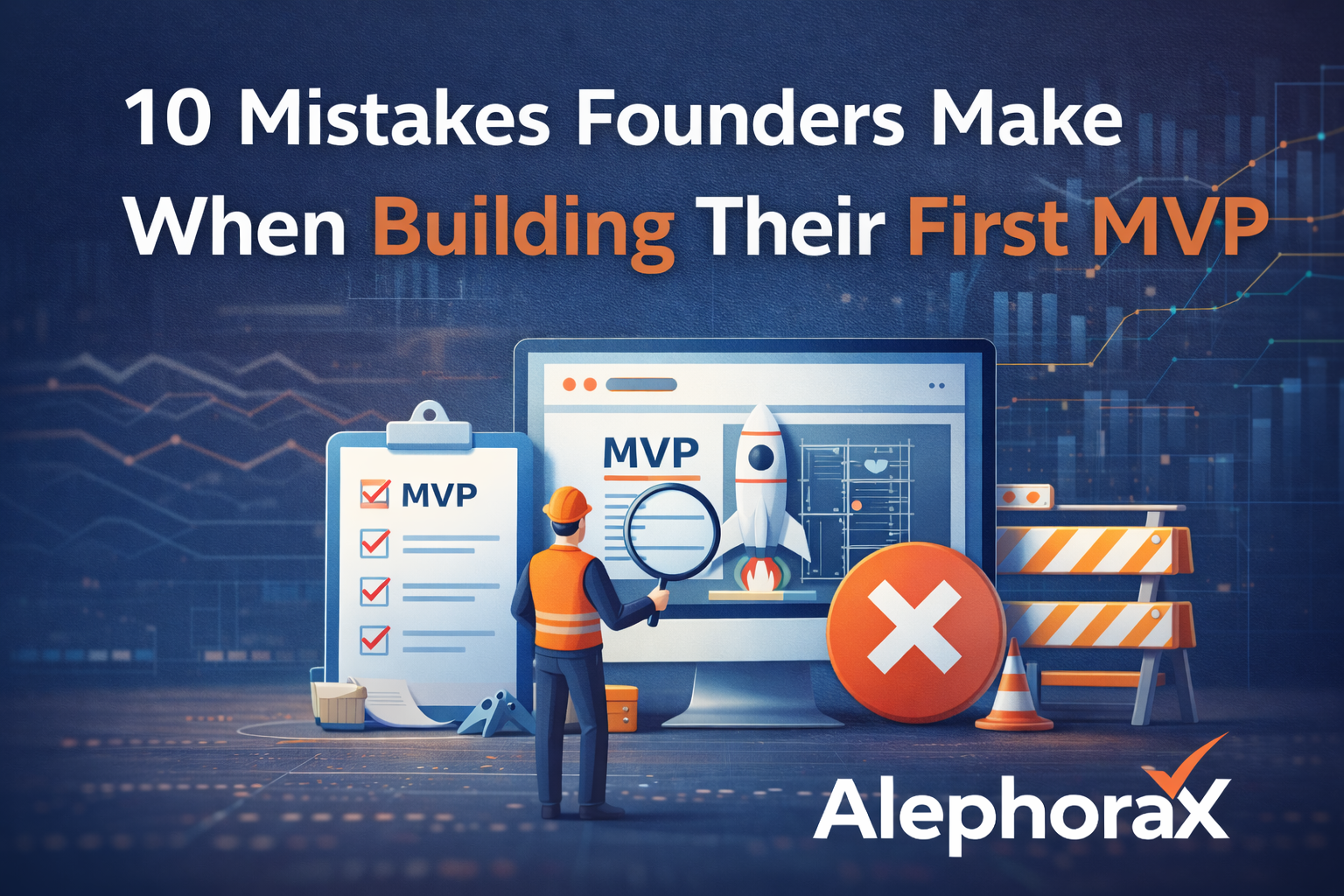
10 Mistakes Founders Make When Building Their First MVP
Launching a startup is exciting, but building your first Minimum Viable Product (MVP) can be one of the most challenging stages of the journey. Many founders rush into development with big ideas but limited validation, which often leads to wasted time, budget, and effort.
An MVP is meant to test your product idea with minimal resources while delivering real value to early users. However, without proper planning and strategy, founders frequently make mistakes that slow down growth or even cause their startup to fail.
In this article, we’ll explore the 10 most common mistakes founders make when building their first MVP and how you can avoid them.
What Is an MVP?
A Minimum Viable Product (MVP) is the simplest version of a product that includes only the essential features required to solve a core problem for users.
The goal of an MVP is to:
- Validate the product idea
- Gather real user feedback
- Test market demand
- Reduce development risks
- Launch faster
Instead of building a full product immediately, startups use an MVP to learn quickly and iterate based on feedback.
1. Building Too Many Features
One of the biggest mistakes founders make is trying to build a full product instead of an MVP.
When startups include too many features in the first version, development becomes slow and expensive.
How to avoid it
Focus only on the core feature that solves the main user problem.
Ask yourself:
What is the single most important problem this product solves?
Everything else can come later.
2. Skipping Market Research
Many founders build products based on assumptions rather than real user needs.
Without market validation, startups risk creating products that no one actually wants.
How to avoid it
Before development:
- Talk to potential users
- Conduct surveys
- Analyze competitors
- Validate the problem
Market research ensures your MVP solves a real market problem.
3. Ignoring User Experience (UX)
Some founders believe UX is not important for an MVP. This is a major mistake.
Even simple products need clear navigation and usability.
Poor user experience can cause early users to abandon the product quickly.
How to avoid it
Invest in basic but effective UI/UX design to ensure users can easily understand and use your product.
4. Choosing the Wrong Technology Stack
Selecting the wrong technology can create major challenges later when the product needs to scale.
Some startups choose technologies that are difficult to maintain or expand.
5. Hiring the Wrong Development Team
An inexperienced development team can lead to poor product quality, delays, and increased costs.
Startups often try to reduce costs by hiring the cheapest developers, which can result in technical debt.
How to avoid it
Work with experienced developers who understand startup product development and MVP strategy.
6. Not Defining Clear Product Goals
Without clear objectives, development can become chaotic.
Founders sometimes start building without defining:
- target audience
- key metrics
- core functionality
How to avoid it
Define a clear product roadmap before development begins.
This should include:
- the problem being solved
- target users
- MVP features
- success metrics
7. Delaying the Launch Too Long
Many founders want the product to be perfect before launching.
However, an MVP is not meant to be perfect — it’s meant to learn from real users quickly.
How to avoid it
Launch early and gather feedback.
The faster you launch, the faster you can improve your product.
8. Ignoring User Feedback
User feedback is one of the most valuable resources during the MVP stage.
Some founders collect feedback but fail to act on it.
How to avoid it
Track user feedback carefully and prioritize improvements based on:
- common user complaints
- feature requests
- usage data
9. Underestimating Development Costs
Many startups underestimate the cost and timeline required to build even a simple MVP.
Unexpected technical challenges can increase development costs significantly.
How to avoid it
Plan realistic budgets and include extra resources for:
- testing
- improvements
- bug fixes
10. Not Planning for Scalability
Even though an MVP is simple, it should still be built with future growth in mind.
If the product becomes successful, the system must be able to handle increased users and data.
How to avoid it
Use scalable architecture and modern infrastructure so the product can grow without major rebuilding.
Best Practices for Building a Successful MVP
To avoid these mistakes, startups should follow these best practices:
- Focus on solving one core problem
- Validate the market before development
- Launch quickly and iterate
- use scalable technologies
- collect and analyze user feedback
These strategies help startups reduce risk and build products users truly need.
Why Startups Choose AlephoraX for MVP Development
At AlephoraX, we help startups transform ideas into scalable digital products.
Our MVP development approach focuses on:
- rapid product development
- scalable architecture
- modern technology stacks
- startup-focused development strategy
- continuous improvement based on user feedback
Whether you're building a startup platform, SaaS product, or mobile application, our team helps launch your MVP faster and smarter.
Final Thoughts
Building an MVP is one of the most important steps in a startup’s journey. Avoiding common mistakes can save founders significant time, money, and effort.
By focusing on user needs, simplicity, and rapid iteration, startups can build products that evolve into successful businesses.
The key is not to build the perfect product — but to build the right product.
Ready to Build Your MVP?
If you're a startup founder looking to turn your idea into a working product, AlephoraX can help.
Our team specializes in startup MVP development, scalable software architecture, and modern product design.
👉 Contact AlephoraX today and start building your MVP.